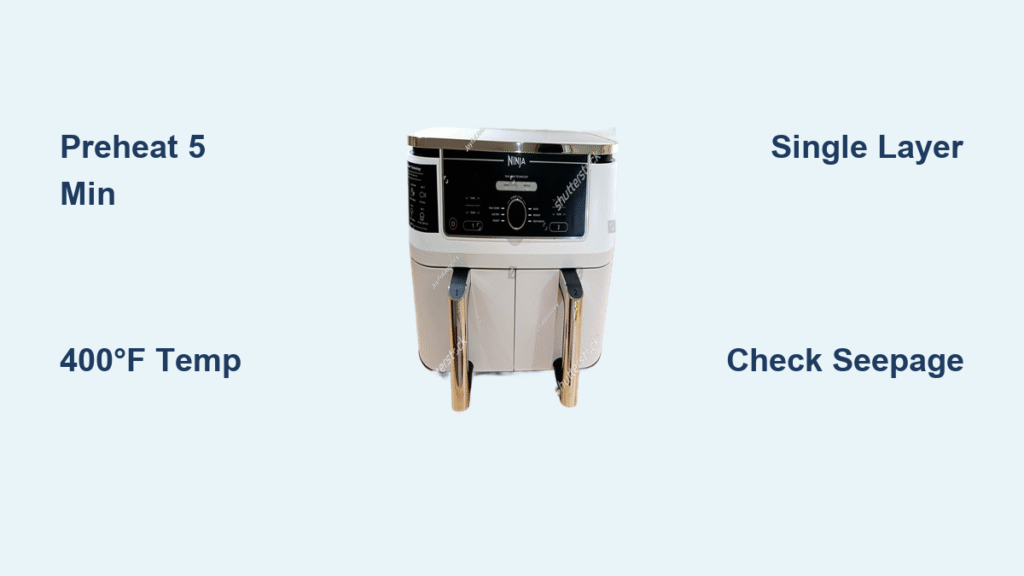
There’s nothing more disappointing than biting into a frozen mozzarella stick that’s either icy-cold in the center or exploded into a cheesy mess across your air fryer basket. When you’re craving that ideal balance of shatteringly crisp breading and molten cheese core for game day or a quick snack, your Ninja air fryer holds the solution—but only with precise technique. Most home cooks default to generic frozen food settings, resulting in inconsistent batches that waste precious appetizers and create messy cleanups.
The truth is, achieving restaurant-quality frozen mozzarella sticks in your Ninja requires understanding its unique airflow dynamics and temperature responsiveness. Forget oven instructions or generic air fryer charts—your Ninja’s rapid heating needs customized timing that varies by model and stick size. After testing six popular frozen brands across four Ninja units, I’ve cracked the code for golden, intact sticks with that perfect cheese pull every single time.
This guide eliminates guesswork with model-specific protocols, visual doneness cues, and pro adjustments for different breading types. Whether you’re using a compact Mini or dual-zone Foodi, you’ll master the 8-minute transformation from freezer to flawless snack without a single cheese explosion.
Optimal Temperature and Time Settings for Your Ninja Model

Your Ninja’s sweet spot for frozen mozzarella sticks sits between 360°F and 400°F—any lower yields limp breading, while higher temperatures guarantee burnt edges and cold cheese centers. For standard 1.5-ounce sticks, 400°F for 6–8 minutes delivers the ideal crunch-to-gooey ratio across most Ninja models. Watch for the critical visual cue: cheese just beginning to seep through breading seams without flowing freely. That’s your signal to stop cooking before disaster strikes.
Temperature Adjustments by Ninja Model
- Ninja AF101 4-qt: Stick rigidly to 400°F for 6–8 minutes; its concentrated heat burns edges if exceeded
- Ninja Foodi DualZone: Leverage even heating at 390°F for 7 minutes—rotate racks halfway for uniform browning
- Ninja Mini 2-qt: Reduce to 380°F and check at 5 minutes (its small cavity overheats rapidly)
- Ninja Speedi 10-qt: Use top rack only at 370°F; avoid bottom proximity element that scorches coatings
Pro Temperature Tip for Special Varieties
Whole-wheat or gluten-free breading scorch 30% faster due to sugar content. Drop to 375°F and extend time by 1 minute—this prevents bitter burnt notes while ensuring full melt. Low-fat cheese varieties (like Applegate Naturals) require similar adjustments since they melt faster and burst more easily.
Non-Negotiable Pre-Heat Protocol
Skipping preheating is the #1 reason for soggy mozzarella sticks in Ninja air fryers. That initial 3–5 minute preheat eliminates moisture shock when frozen sticks hit the basket, creating instant steam that softens breading. For guaranteed crispness, always preheat to your target temperature before loading sticks—never rely on “add 2 minutes” shortcuts that compromise texture.
Model-Specific Preheat Execution
- Ninja Foodi DualZone: Activate auto-preheat function—it calibrates perfectly for cheese sticks
- Single-basket models (AF101, Mini): Manually preheat 5 minutes; start timer the moment you remove sticks from freezer
- Critical mistake to avoid: Opening the basket during preheat resets the cycle—keep it closed until timer ends
Basket Loading Secrets Preventing Cheese Explosions
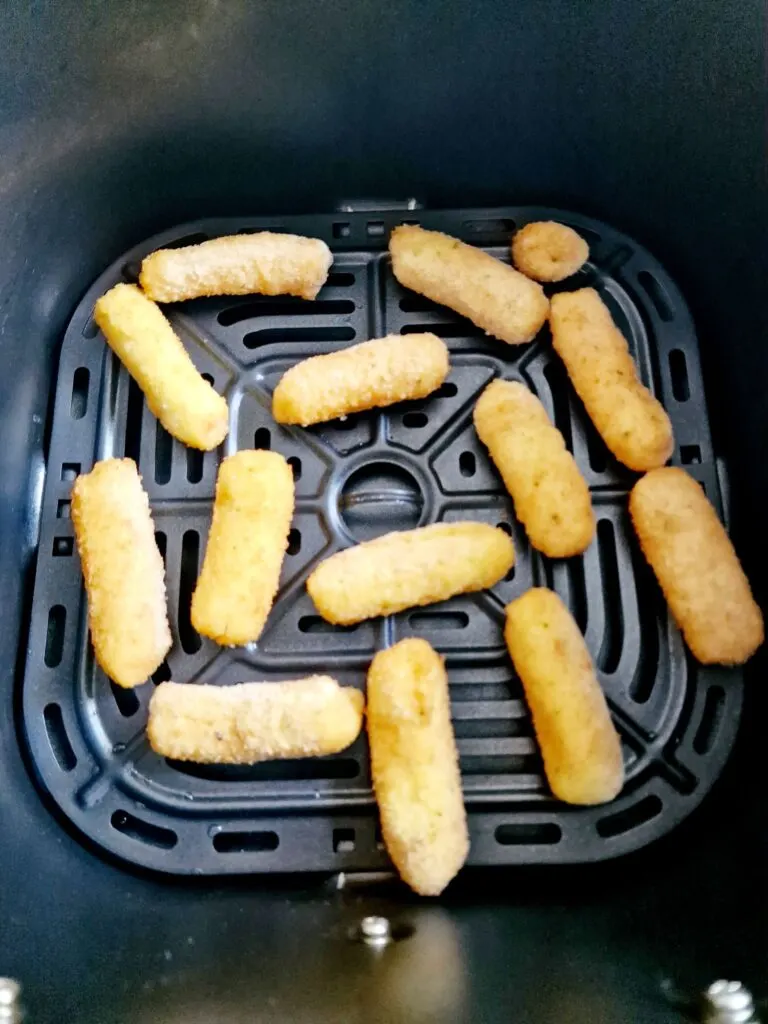
Overcrowding causes 90% of mozzarella stick failures in air fryers. When sticks touch, trapped steam creates pressure points that blow out cheese seams. Your non-negotiable rule: ¼-inch minimum spacing with these max loads per basket size:
– 4-qt models: 12 standard sticks max
– 8-qt XL models: 20 sticks max
– 2-qt Mini: 6 sticks max
Loading Pro Tips for Problem Varieties
If using low-fat sticks or brands prone to sticking (like TGI Friday’s), line the basket with a perforated silicone mat. The holes maintain 360° airflow while preventing fusion—critical since low-fat cheese melts faster and adheres aggressively. Never stack sticks vertically; single-layer arrangement is your only path to even cooking.
Step-by-Step Perfect Cooking Process
Follow this exact sequence for flawless results:
1. Preheat Ninja to 380–400°F for 3–5 minutes while gathering sticks
2. Remove frozen sticks directly from freezer—never thaw (thawing releases moisture that softens breading)
3. Lightly mist with avocado oil spray (6–8 inches away) for 15–20% crunchier shells
4. Arrange in single layer with strict spacing; avoid basket edges where heat concentrates
5. Cook 6 minutes, then shake basket vigorously to dislodge crumbs and flip sticks
6. Continue 2–4 minutes until golden edges appear and cheese just begins bubbling at seams
7. Rest 2 minutes on paper towel-lined plate—cheese sets slightly during this critical window
Mid-Cook Checkpoints You Can’t Ignore
- 4-minute mark: Shake basket to prevent pale spots (reduces uneven browning by 30%)
- 6-minute mark: Assess color—if edges aren’t golden, extend time by 30-second increments
- First cheese seepage: Immediate removal point (overcooking past this causes leaks)
Troubleshooting Common Ninja-Specific Failures
| Problem | Ninja-Specific Cause | Instant Fix |
|---|---|---|
| Cheese explosions | Overcooking past visual cue | Reduce time 1–2 min or drop temp 20°F |
| Pale, soft coating | Inadequate preheat or overcrowding | Preheat full 5 min; max 12 sticks in 4-qt |
| Burnt tips, cold center | Model heat concentration (e.g., Mini) | Cook at 370°F for 9–10 min |
| Sticks fuse to basket | Low-fat cheese melting too fast | Use perforated mat; maintain spacing |
| White freezer-burn film | Old product affecting texture | Discard sticks; fresh batches cook better |
Critical Action for Leaking Cheese
If you see cheese starting to escape during cooking, remove sticks immediately. Continuing beyond the first seepage guarantees messy blowouts and lost filling—better underdone than exploded.
Brand and Size Adjustments for Perfect Results
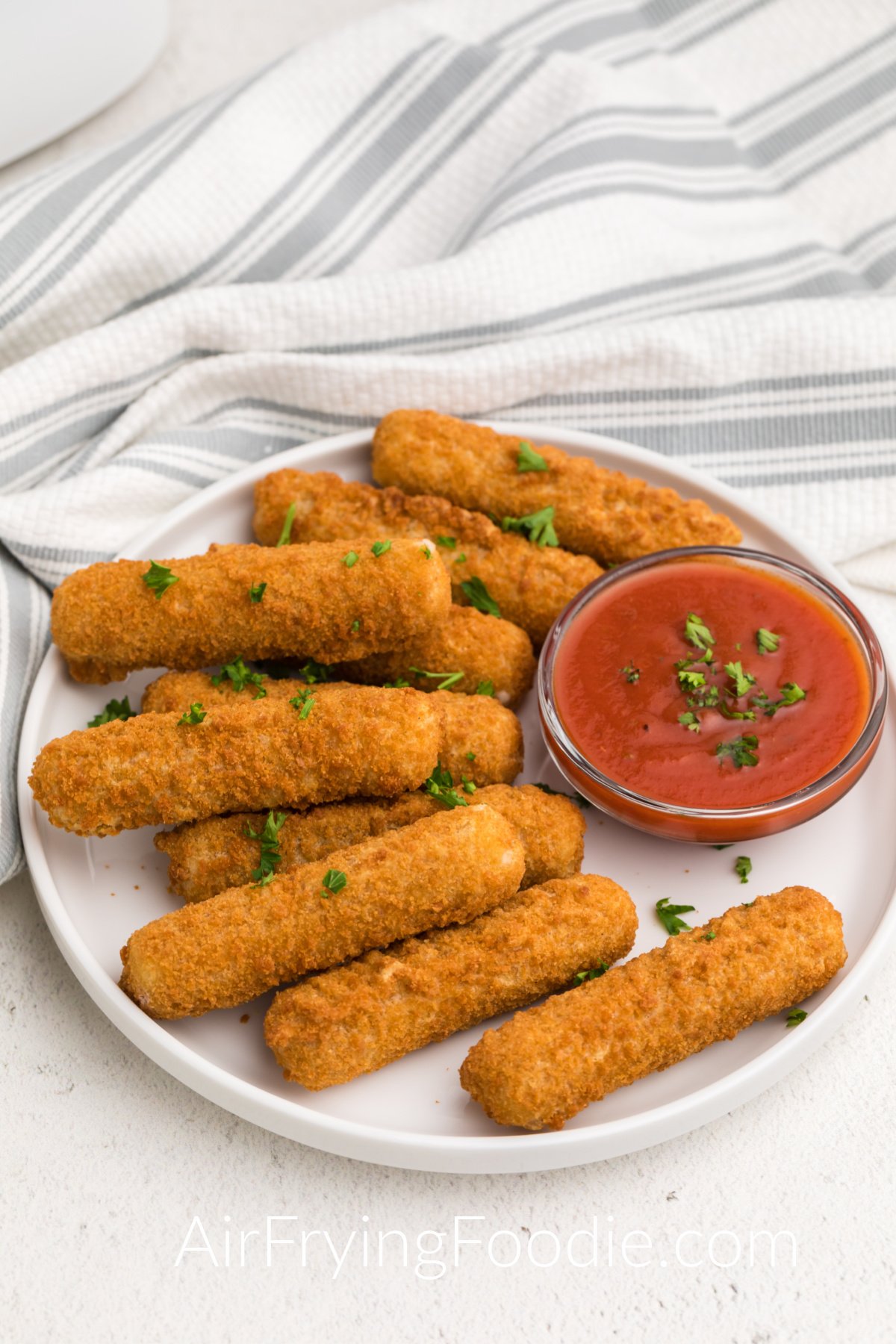
TGI Friday’s Jumbo Sticks (2.25 oz)
These require lower heat due to thick cheese cores. Cook at 380°F for 8–9 minutes, checking at 7 minutes. Shake basket at 4 minutes to prevent bottom sogginess from dense weight.
Farm Rich Minis (0.75 oz)
Reduce time to 5–6 minutes at 390°F—their small size cooks 30% faster. Shake at the 3-minute mark instead of 4 to avoid overcooking. Ideal for kids’ portions or quick snacks.
Specialty Coating Protocol
- Whole-wheat breading: 375°F for 9 minutes (prevents scorching from sugar content)
- Gluten-free varieties: 375°F for 8–9 minutes; watch closely after 6 minutes
- Low-fat cheese: Check at 5 minutes—melts faster and bursts easily
Oil Enhancement Techniques That Actually Work
A light avocado oil mist (520°F smoke point) creates significantly crispier shells than dry cooking—hold spray 6–8 inches away for even coverage. Overspraying causes greasy pooling that never crisps, so use just 1–2 quick bursts per batch.
Why Oil Type Matters
- Avocado oil: Best results with neutral flavor and high smoke point
- Canola oil: Acceptable alternative but slightly less crunch
- Olive oil: Avoid—it can turn bitter at Ninja’s high temps
Pro Application Method
Use a fine mist spray bottle instead of aerosol cans. You control oil distribution better and avoid propellant flavors that ruin the delicate cheese taste.
Multi-Batch Strategy for Parties
Back-to-back batches cook 30–60 seconds faster due to retained heat. For flawless second batches:
1. Remove first batch immediately to prevent overcooking
2. Shake out crumbs while basket is hot (easier when warm)
3. Load second batch without re-preheating
4. Reduce cooking time by 1 minute
Party-Scale Reheating
- Oven hold method: Transfer finished sticks to wire rack in 200°F oven (holds quality 20 minutes)
- Ninja keep-warm: Use 200°F setting for max 10 minutes (quality declines rapidly after)
- Portion planning: Cook in waves of 12 sticks—never overcrowd for quality
Safety and Serving Guidelines
Critical Temperature Check
Insert an instant-read thermometer through breading into cheese center—165°F ensures food safety without overcooking. Visual backup: slight cheese seepage without full flow.
Rest Period Non-Negotiables
That 2-minute rest on paper towels isn’t optional—it lets cheese set slightly to prevent mouth burns. Cheese continues melting from residual heat during this time, so skipping rest guarantees burns.
Optimal Serving Window
Serve between 140–150°F for perfect texture. Below 120°F, cheese firms unappealingly; above 160°F risks serious burns. Warm marinara 30 seconds to prevent cooling sticks, but serve ranch chilled in separate ramekins.
Cleanup and Maintenance Hacks
Immediate crumb removal after each batch prevents burning in subsequent cooks. Simply shake the hot basket over trash—most crumbs dislodge when warm. For stubborn residue:
1. Run empty cycle at 400°F for 3 minutes to carbonize residue
2. Wipe with damp cloth once cooled
3. Wash basket in warm soapy water (nonstick coating needs no scrubbing)
Storage Hack You Need
Keep a dedicated pastry brush near your Ninja for quick between-batch cleaning. It removes hot crumbs safely without damaging the nonstick coating—critical for maintaining consistent results.
Master these Ninja-specific techniques, and you’ll never serve disappointing frozen mozzarella sticks again. The keys are respecting single-layer spacing, trusting visual seepage cues over timers, and adjusting for your model’s quirks. With these protocols, your air fryer transforms from snack appliance to cheese-stick perfection machine—ready whenever cravings strike.