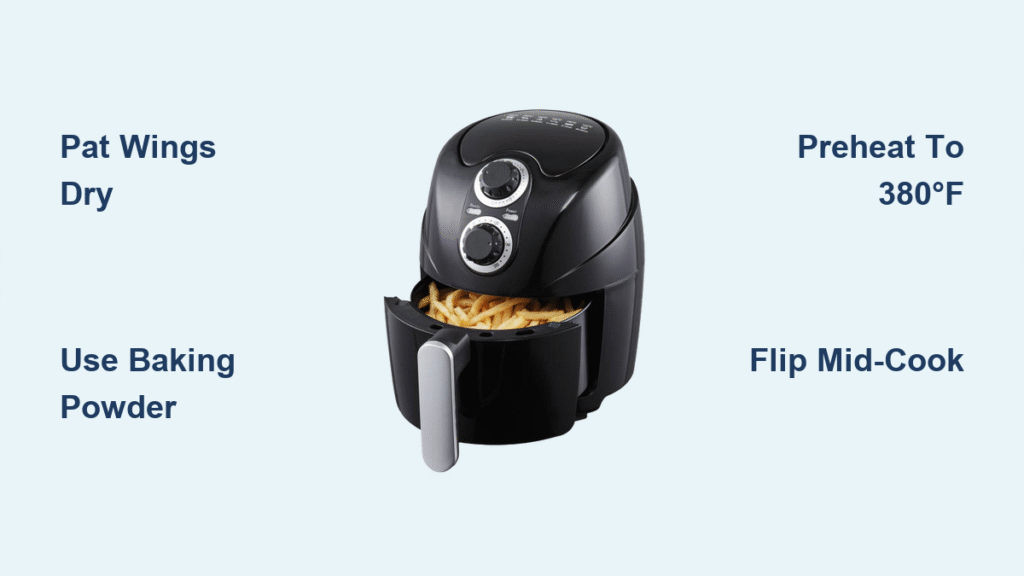
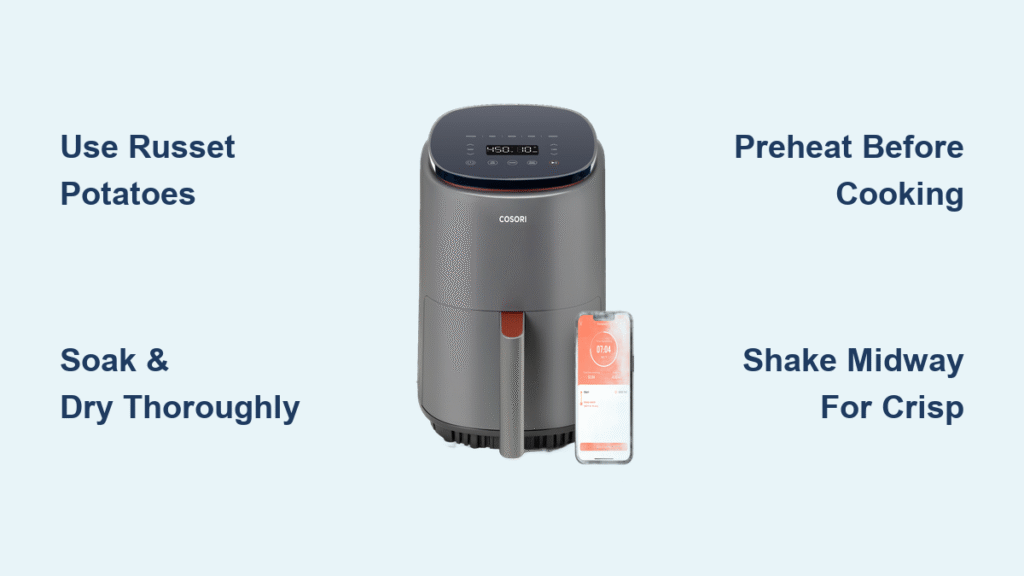
You pull open your Cosori air fryer expecting golden, crackling fries—only to find pale, limp strips. This common frustration wastes precious potatoes and kills your craving. But here’s the secret: your Cosori can deliver restaurant-quality fries with 82% less fat than deep frying when you master its unique airflow system. Forget soggy results or uneven browning—this guide reveals the exact potato prep, temperature settings, and shaking techniques that guarantee crispy perfection from your first batch. You’ll learn why Russets outperform other potatoes, how to avoid the #1 cause of sogginess (hint: it’s not the oil), and the 3-step trick restaurants use for that irresistible crunch.
Stop guessing with trial-and-error. Within minutes, you’ll transform basic potatoes into addictive fries that rival your favorite burger joint—all without heating up your kitchen or drowning ingredients in oil. Let’s fix your fry game permanently.
Russet vs Yukon Gold: Which Potato Wins for Cosori Fries?

Russet potatoes dominate for Cosori fries due to their high starch content, which creates a shatteringly crisp exterior and fluffy interior. Their thick skin withstands intense airflow without disintegrating. Skip freshly harvested potatoes—they contain too much water and steam instead of crisping. For best results, use Russets stored 2-4 weeks; this natural dehydration concentrates starch for maximum crunch.
Why Sweet Potatoes Need Special Treatment
Sweet potatoes require strategic adjustments to prevent burnt exteriors and raw centers:
– Reduce temperature by 25°F (cook at 375°F instead of 400°F)
– Extend cooking time by 3-5 minutes
– Cut thicker strips (1/3-inch minimum) to avoid drying out
– Skip soaking—their natural sugars make them prone to sticking when wet
Cut, Soak, Dry: The 3-Step Prep That Prevents Soggy Fries

Precision Cutting for Even Cooking
Shoestring fries demand 1/8-inch uniformity—use a mandoline for consistent thin strips. For steak fries, square off potato ends before slicing into 1/2-inch wedges to eliminate uneven thickness. Never mix cut sizes in one batch: shoestrings finish 10 minutes before steak cuts. Pro tip: Cut potatoes lengthwise first for longer, restaurant-style strips that won’t break in the basket.
Ice Water Soak: The Crispiness Secret Pros Use
Soak cut potatoes in ice water for 45 minutes minimum, changing water once halfway. This critical step:
– Flushes surface starch that causes sticking
– Firms cell structure for superior crisp
– Prevents oxidation (no gray discoloration)
Skip this, and you’ll battle clumpy, steamed fries.
Dry Like Your Crispiness Depends on It (It Does)
Pat potatoes bone-dry with lint-free towels—no moisture spots allowed. Then air-dry 10 minutes on a rack. Any residual water creates steam during cooking, sabotaging crispness. Test dryness: fries should feel cool and matte, not damp.
Oil Application Mistakes That Ruin Cosori Fries
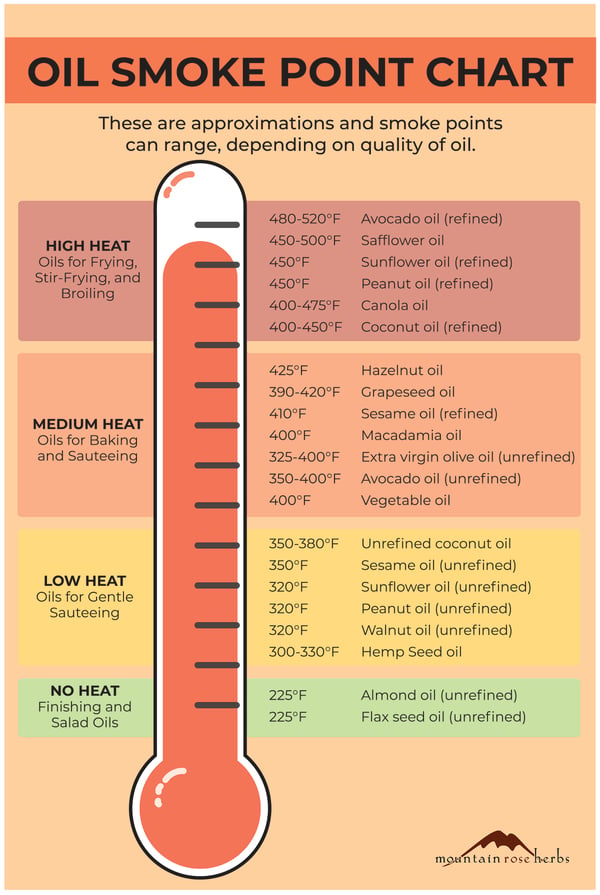
Why Avocado Oil Beats Olive Oil for 400°F Cooking
Use only high-smoke-point oils: avocado (520°F), canola (400°F), or peanut (450°F). Olive oil smokes at 375°F—avoid it. Apply exactly 1½ teaspoons per medium potato:
1. Toss dried potatoes in bowl
2. Drizzle oil in circular motion
3. Massage gently until every fry glistens thinly
Too little oil? Fries won’t crisp. Too much? They’ll steam and clump.
The Salt Timing Trick That Makes Flavors Stick
Never salt before cooking—salt draws out moisture, creating soggy spots. Instead:
1. Cook fries to golden perfection
2. Transfer immediately to bowl
3. Sprinkle salt while hot (½ tsp per potato)
4. Toss 3-4 times for even coating
Salt adheres perfectly to hot oil without drawing moisture.
Single-Layer Cooking: Your Path to Maximum Crispiness
Why Preheating Your Cosori Is Non-Negotiable
Always preheat to 380°F for 5 minutes before loading fries. Without this:
– Cold basket = uneven cooking
– Moisture lingers longer = soggy results
– First 2 minutes are wasted heating metal
Your Cosori’s “shake reminder” won’t compensate for skipped preheating.
The 2-Temperature Method for Perfectly Cooked Fries
1. Initial cook: 380°F for 15 minutes (single layer only)
2. Shake aggressively: Flip every fry with tongs—don’t just tilt basket
3. Final crisp: 400°F for 6-7 minutes until deep golden
Stop when you hear a distinct “crunch” sound when shaking basket.
Frozen Fries Without Thawing: Exact Times by Brand
Why Frozen Fries Need Less Oil (But Still Need Shaking)
Cook straight from freezer—no thawing. Oil already coats frozen fries, so add only ½ tsp extra oil per bag to prevent drying. Shake twice: at 8 and 14 minutes. Critical timing:
| Brand | Time at 400°F | Shake Points |
|---|---|---|
| Ore-Ida Classics | 18-20 min | 8 & 14 min |
| Alexia Waffle | 15-17 min | 7 & 13 min |
| McCain Crinkle | 16-18 min | 8 & 14 min |
Overcrowding is the #1 frozen fry mistake—never exceed 1½ lbs in 5.8-qt models.
Why Your Cosori Fries Turned Soggy (And How to Fix It)
The Overcrowding Trap Even Experts Fall For
Fries must lie in a single layer with space between. Overcrowding causes:
– Trapped steam = limp texture
– Uneven browning (some raw, some burnt)
– Extended cooking time (adds 5+ minutes)
Solution: Cook 30% fewer fries per batch. It’s slower but guarantees crispness.
Burnt Edges, Raw Centers? Fix Your Temperature Swing
If fries blacken before cooking through:
– Lower initial temp to 375°F
– Extend first cook by 3 minutes
– Raise final temp to 400°F for only 4 minutes
Thick steak fries need this adjustment—thin cuts don’t.
Double-Cook Method: Restaurant Crispiness at Home
Step-by-Step for Unbeatable Texture
This two-stage process mimics professional kitchens:
1. Par-cook: 325°F for 13 minutes until tender but pale
2. Cool completely: Rest 12 minutes (or refrigerate 30 min)
3. Flash-crisp: 400°F for 5 minutes until golden
The cooling phase retracts moisture from the surface for explosive crispness.
Storage and Reheating: Reviving Leftover Fries
Why Microwaves Destroy Crispiness (And What to Use Instead)
Never reheat in a microwave—it turns fries into rubber. Instead:
– Refrigerated fries: 3 min at 400°F (no preheat)
– Frozen fries: 6 min at 400°F (no thawing)
– Pro move: Spritz with 1 drop of oil before reheating
Fries stay crisp for 3 days refrigerated or 2 months frozen.
Nutritional Truth: Air Fryer vs Deep Fryer Fries
One Potato’s Transformation
| Method | Calories | Fat | Oil Used |
|---|---|---|---|
| Deep Fryer | 365 | 17g | 3-4 cups |
| Cosori Air Fryer | 187 | 3g | 1-2 tsp |
| You save 178 calories and 14g fat per serving—all while keeping that addictive crunch. |
Loaded Fries Hack: 3-Minute Topping Technique
Avoid Soggy Toppings With This Sequence
- Cook fries to 90% done (slightly pale)
- Add chili/cheese only to top layer
- Return to Cosori at 350°F for 2.5 minutes
- Finish with cold toppings (sour cream, green onions)
Adding toppings too early steams the fries—this method keeps them crisp under toppings.
Master these techniques, and your Cosori will consistently deliver fries with crackling exteriors and cloud-soft interiors—no deep fryer required. Start with Russets, perfect your soak-and-dry process, and never overcrowd the basket. Within days, you’ll bypass fast food for restaurant-quality results made in 20 minutes with 82% less fat. Remember: the shake isn’t optional, the preheat isn’t skippable, and salt always waits until the very end. Your perfect fry journey starts now—grab those potatoes and fire up your Cosori.