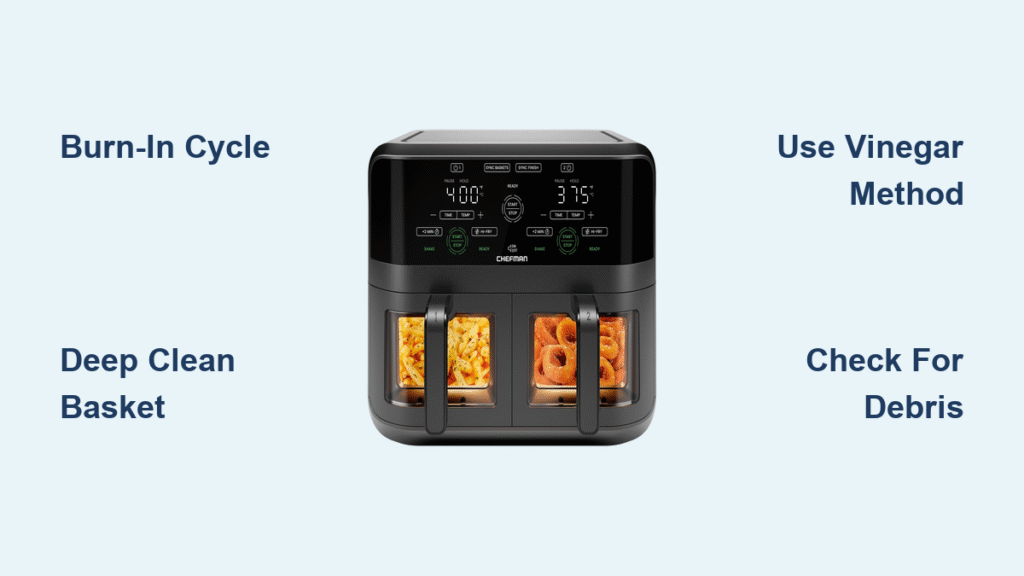
That sharp, chemical odor hitting your nose when you first fire up your new Chefman air fryer isn’t just unpleasant—it can make you question whether it’s safe to cook food in it at all. You’re not alone in this experience, and the good news is that plastic smell from your Chefman air fryer is typically temporary and completely fixable. Most new air fryers, including Chefman models, emit this odor during initial uses due to manufacturing residues and protective coatings burning off.
This comprehensive guide walks you through proven methods to eliminate the smell quickly, determine when it’s safe to use, and prevent it from returning. Whether you just unboxed your first air fryer or have been struggling with persistent odors, these practical solutions will get you cooking with confidence in no time.
Why Your Chefman Air Fryer Smells Like Plastic
Manufacturing Residue Buildup
New air fryers arrive with protective oils, plastic mold release agents, and packaging materials clinging to heating elements and interior surfaces. When heated for the first time, these substances vaporize, creating that distinctive plastic smell that can permeate your kitchen. This is especially common with non-stick coated baskets and trays that require protective coatings during shipping.
Heat-Activated Materials
The non-stick coating, plastic components, and heating element insulation in air fryers contain polymers that release volatile organic compounds (VOCs) when first exposed to high temperatures. This process, called off-gassing, is most intense during the first 2-3 uses as the appliance reaches its operating temperature for the first time. The smell typically diminishes as these materials stabilize with repeated heating cycles.
Packaging Material Transfer
Styrofoam packing materials and plastic bags often leave microscopic residue on heating elements. Even thorough wiping might miss these particles, which then burn during initial operation and create persistent odors. Check carefully for any overlooked packaging fragments that could be causing the smell.
Quick Diagnostic Tests
Identify Smell Source Location
Check these specific areas for plastic residue before proceeding with smell elimination:
Heating Element Area: Look for white film or sticky residue on the coil or heating plate
Basket Interior: Examine corners and edges for plastic shavings or packaging fragments
Drip Tray: Check underneath for melted plastic pieces from packaging
Fan Vents: Ensure no plastic film covers air circulation openings
Safety Assessment Checklist
Before proceeding with smell elimination:
- [ ] No visible plastic pieces or melted material
- [ ] Heating element appears clean and intact
- [ ] No burning plastic smell after 3-4 uses
- [ ] Food doesn’t taste like chemicals when cooked
If you notice visible damage or persistent smoke, stop using the appliance immediately and contact the manufacturer.
Burn-In Process That Works
Initial Empty Run Method
Turn your Chefman air fryer into a temporary odor eliminator with this proven sequence:
- Remove all packaging materials and wash basket/tray with warm soapy water
- Set temperature to 400°F for maximum residue burn-off
- Run empty for 20 minutes with kitchen vent running
- Repeat cycle 2-3 times until odor significantly reduces
- Cool completely between each cycle
This process allows the protective coatings to fully burn off without contaminating your food. Make sure to run your kitchen exhaust fan or open windows during this process to vent the odors outside.
Enhanced Burn-In with Natural Deodorizers
Boost effectiveness by adding odor-absorbing ingredients during your final burn-in cycle:
Lemon Method: Place lemon slices in basket during final 10 minutes of burn-in
Vinegar Steam: Add 2 tablespoons white vinegar in heat-safe bowl during last cycle
Baking Soda: Dust light coating on basket bottom for final 15-minute cycle
These natural deodorizers help neutralize remaining odors while leaving a pleasant scent.
Deep Cleaning Protocol
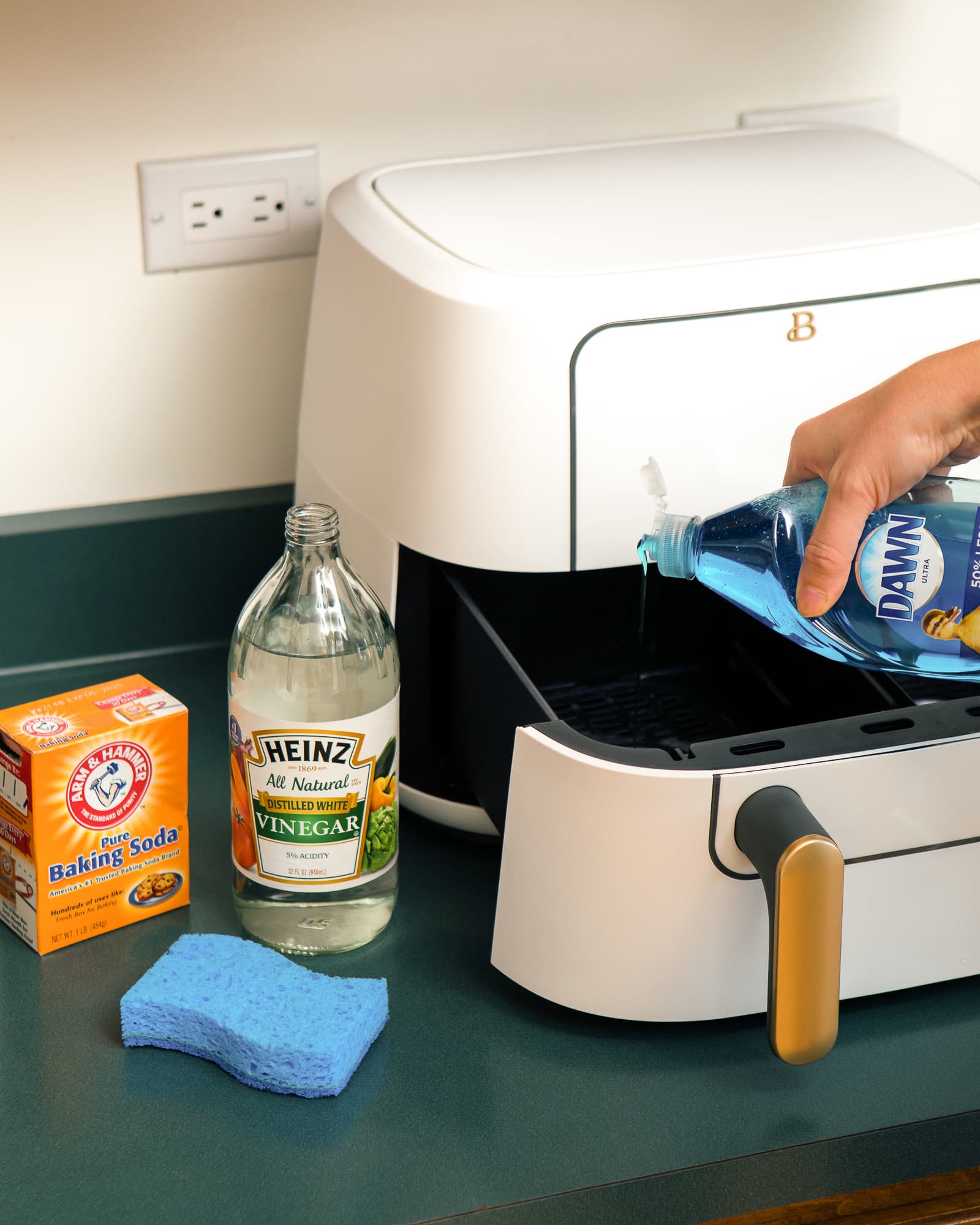
Basket and Tray Deep Clean
Eliminate stubborn residues with this thorough approach:
- Create cleaning paste: Mix 3 tablespoons baking soda with 1 tablespoon water
- Apply to all surfaces: Cover basket interior, tray, and heating element guard
- Let sit 30 minutes: Allow paste to break down plastic residues
- Scrub with soft brush: Use non-abrasive brush or soft cloth
- Rinse thoroughly: Remove all baking soda residue
Avoid using harsh chemicals or abrasive scrubbers that could damage the non-stick coating. Always hand wash these components rather than putting them in the dishwasher.
Heating Element Care
Safely clean the heat source without damage:
- Unplug unit completely and allow full cooling
- Use damp cloth only on heating element surface
- Avoid harsh chemicals that could damage coating
- Check for plastic fragments gently with flashlight
- Air dry 2+ hours before next use
Never immerse the main unit in water or use excessive moisture near electrical components.
Accelerated Smell Removal Techniques

Activated Charcoal Method
Place 2-3 tablespoons activated charcoal in the basket and run at 200°F for 30 minutes. The charcoal absorbs VOCs more effectively than open air ventilation alone. This is particularly useful if you need to eliminate odors quickly before cooking an important meal.
Coffee Ground Absorption
Used coffee grounds in a heat-safe bowl absorb plastic odors while adding neutral coffee aroma. Run at 250°F for 15 minutes, discard grounds, and repeat if needed. This method works well for lingering background odors that persist after initial burn-in cycles.
Citrus Peel Deodorizer
Orange or grapefruit peels contain natural oils that neutralize plastic smells. Place peels in basket during 300°F cycle for fresh, clean scent. The citrus oils help break down residual compounds causing the odor while leaving behind a pleasant aroma.
Model-Specific Considerations

Chefman TurboFry Series
These larger capacity models often require longer burn-in due to their expanded cooking chambers and additional plastic components. Extend initial burn-in to 25-30 minutes per cycle, and consider running 3-4 empty cycles instead of the standard 2-3.
Chefman Digital Models
Digital displays and control panels may emit stronger odors initially as their electronic components heat up. Ensure good ventilation around the control panel area and avoid covering vents during first uses to prevent odor concentration.
Compact Chefman Models
Smaller units concentrate odors more intensely due to their reduced interior space. Reduce burn-in temperature to 375°F to prevent overheating smaller heating elements while still effectively burning off residues.
Prevention Strategies
First Use Preparation
- Remove all protective films and stickers before initial use
- Wash all removable parts thoroughly with mild soap
- Run initial burn-in cycles before cooking food
- Use kitchen exhaust fan during first week of use
Taking these precautions can significantly reduce the intensity and duration of the plastic smell during initial use.
Ongoing Maintenance
- Clean after each use to prevent residue buildup
- Avoid cooking highly acidic foods in new unit during first week
- Store with basket removed for better air circulation
- Wipe interior with vinegar solution monthly for odor prevention
Regular maintenance prevents odor-causing residues from accumulating over time.
When to Seek Replacement
Red Flags Requiring Contact
Contact customer service immediately if you notice:
- Persistent burning plastic smell after 5+ uses
- Visible melted plastic on any component
- Smoke production during normal operation
- Food tastes like chemicals after cleaning and burn-in
- Heating element discoloration or damage
These issues could indicate a manufacturing defect rather than normal break-in odors.
Warranty Considerations
Most air fryers include limited warranty coverage for manufacturing defects. Document any persistent smell issues with:
– Purchase date and model number
– Photos of any visible problems
– Description of attempted solutions
– Number of uses since purchase
This documentation will help if you need to file a warranty claim.
Quick Reference Timeline
Day 1: Initial burn-in cycles (2-3 empty runs)
Day 2-3: Light cooking with strong-flavored foods like chicken wings
Day 4-5: Normal cooking should be odor-free
Week 2: Persistent smell requires deeper cleaning protocol
Week 3: Contact manufacturer if smell continues
Most users achieve odor-free cooking within 3-5 uses when following proper break-in procedures.
Pro Tips for Success
Speed Up Process: Run burn-in cycles back-to-back with adequate cooling periods
Test Progress: Cook a piece of bread after each cycle to test for plastic taste
Ventilation Boost: Place unit near open window during burn-in cycles
Future Prevention: Always remove new appliances from packaging immediately
Your Chefman air fryer’s plastic smell will disappear completely when following these proven methods. Most users achieve odor-free cooking within 3-5 uses. If the smell persists beyond a week of normal use despite following these procedures, contact customer support for potential replacement under warranty. Remember that a mild odor during initial uses is normal for most new appliances with non-stick coatings, but it should never be overpowering or persistent. With proper break-in and maintenance, your Chefman air fryer will provide healthy, delicious meals without unpleasant chemical smells.