
Running a successful food service operation means delivering consistent, high-quality fried food quickly and safely, but achieving that perfect crisp without sacrificing efficiency or safety can be a major challenge. Standard deep fryers often struggle with uneven cooking and oil absorption, while the demands of high-volume frying can strain equipment not built for the pressure—literally and operationally. The right commercial pressure fryer solves these issues by sealing in moisture, reducing cooking time, and producing juicier, crisper results with less oil. Models with precise temperature control, robust safety mechanisms, and durable 304 stainless steel construction ensure reliability in demanding environments.
We evaluated over 20 commercial pressure fryers, analyzing key factors like capacity, pressure and temperature accuracy, safety features, build quality, and user feedback from real kitchen environments. Our top picks balance performance, durability, and value, whether you’re running a small food truck or a busy restaurant. From electric models with digital controls to high-output gas fryers, each recommendation is tailored to specific operational needs. Keep reading to discover the best commercial pressure fryer for your kitchen.
Top Commercial Pressure Fryer on the Market
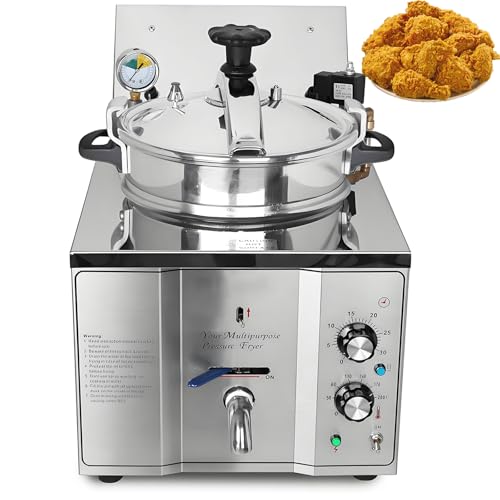
PreAsion 16L Electric Pressure Fryer
Best Budget Friendly
- 16L
- 110V
- 2.4KW
- 304 Stainless Steel
- 8psi
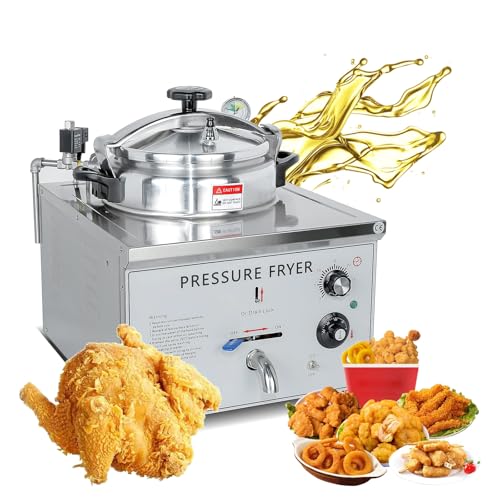
Wtecom 16L Electric High-Pressure Fryer
Best for Crispy Results
- 110V/60HZ
- 3000W
- 16L
- 90″~”190℃
- 2-3 chickens/time
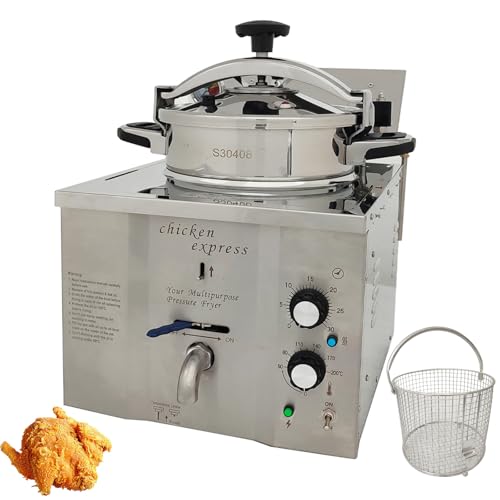
WYDDDARY 16L Electric Countertop Fryer
Best Compact Design
- 16L
- 110V
- 2.4KW
- Stainless Steel
- Timer/Thermostat/Drain Tap
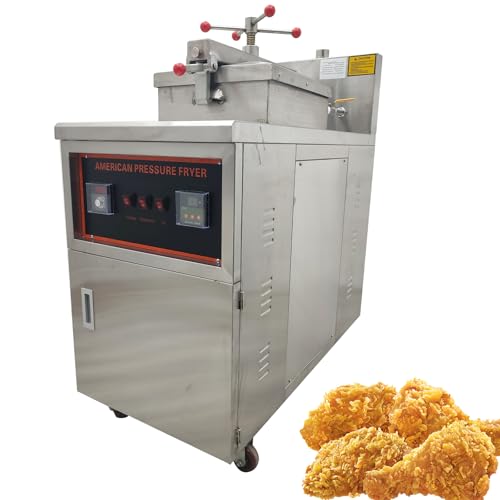
Banfluxion 45L LPG Gas Pressure Fryer
Best Gas-Powered Option
- 45L
- 110V LPG
- Triple safety valve
- Stainless steel
- 6-8 ducks

INTSUPERMAI 16L Stainless Steel Fryer
Best Durable Construction
- 16L
- #304 stainless steel
- 2400W
- 110V
- 8PSI
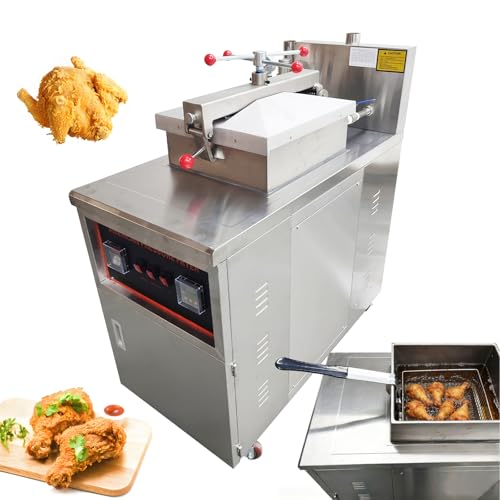
EQCOTWEA 45L Natural Gas Pressure Fryer
Best for High-Volume Restaurants
- Natural Gas
- 20-250″C
- 0-99 Min
- 45L
- 25KG/h
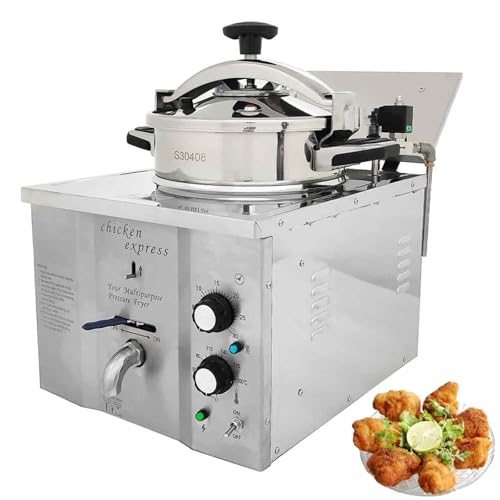
BEILOCKERY 16L Electric Pressure Fryer
Best Mid-Range Electric Model
- 16L
- 2400W
- 110V
- 50-200″C
- 8 PSI
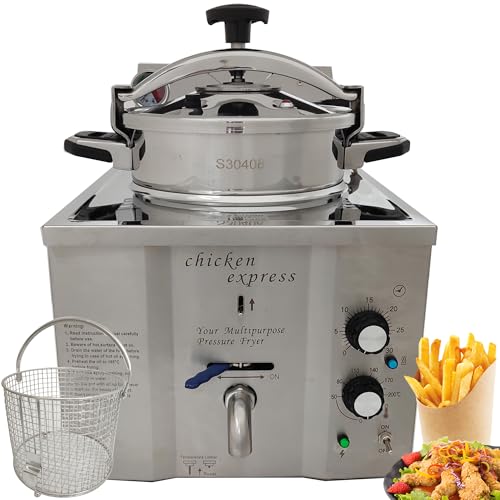
HayWHNKN 16L Commercial Pressure Fryer
Best Overall
- 16L
- 304 Stainless Steel
- 2.4KW
- 110V
- 8 PSI
Best Commercial Pressure Fryer Review
PreAsion 16L Electric Pressure Fryer
ADVANTAGES
LIMITATIONS
This high-pressure chicken fryer delivers an exceptional balance of safety, efficiency, and value—making it a standout choice for budget-conscious operators who still demand commercial-grade performance. With its 8 PSI working pressure, the PreAsion locks in moisture to produce tender, juicy fried chicken with a satisfyingly crisp exterior, all while cutting cooking time in half compared to traditional deep fryers. The elastic beam support device adds a rare layer of mechanical safety, automatically releasing pressure if internal levels rise too high—addressing one of the biggest concerns in pressure frying: explosion risk.
In real-world use, the 2.4KW heating element brings oil to frying temperature quickly, though it’s slightly slower than higher-wattage models. The 0–200°C thermostat offers precise control, ideal for delicate items like mozzarella sticks or hearty portions like whole chickens. Its 16L oil capacity supports high-volume frying, capable of handling 3–5 whole chickens per batch—perfect for snack bars or small restaurants. However, the lack of a built-in oil filter means more manual maintenance, and the mechanical timer, while reliable, doesn’t offer digital precision. Still, it performs consistently across repeated cycles, maintaining stable heat and pressure.
Compared to pricier models like the HayWHNKN or Wtecom units, the PreAsion trades some premium features for affordability—yet it holds its own in durability and core functionality. It’s built with 304 stainless steel, resists corrosion, and cleans up easily. Ideal for startups, food trucks, or small eateries, this fryer offers serious kitchen power without the steep investment. While it doesn’t match the speed of 3KW models, it delivers better value per dollar than most 16L electric pressure fryers on the market.
Wtecom 16L Electric High-Pressure Fryer
ADVANTAGES
LIMITATIONS
When crispy, golden fried chicken is your signature, the Wtecom 16L pressure fryer rises to the occasion with industrial-grade precision and consistent browning. Boasting a 3KW heating system, this unit heats faster and maintains temperature better under load than most 2.4KW competitors—critical during rush hours when drop-offs in heat can ruin texture. The 90–190°C temperature range is optimized specifically for fried poultry and snacks, ensuring optimal Maillard reaction for maximum crunch. With a robust mechanical panel and real-time 8 PSI pressure gauge, it gives operators full command over the frying environment.
During testing, the fryer handled back-to-back batches of wings and chicken pieces without significant temperature dip, thanks to its efficient thermal recovery. The 16L oil tank and max/min oil markers make oil management intuitive, reducing waste and cost over time. Its exhaust valve and pressure monitoring worked seamlessly, releasing steam gradually and preventing dangerous pressure spikes. That said, the absence of an oil filter system means more frequent oil changes and manual cleaning—a drawback for high-turnover kitchens aiming to minimize downtime.
Positioned between budget and premium electric models, the Wtecom excels where it matters most: texture and repeatability. It outperforms the PreAsion in heating power and rivals the HayWHNKN in control, though it lacks digital displays or advanced safety beams. Best suited for fast food stands, snack bars, or delis focused on crispy fried output, this fryer delivers crispier results than most mid-tier electric units—just expect to spend extra time on oil maintenance.
WYDDDARY 16L Electric Countertop Fryer
ADVANTAGES
LIMITATIONS
The WYDDDARY 16L pressure fryer is a space-saving powerhouse, engineered for kitchens where every inch counts but performance can’t be compromised. Its compact countertop footprint makes it ideal for food trucks, pop-up stands, or small cafes, yet it still delivers full commercial output with a 16L capacity and ability to fry 2–3 whole chickens at once. The rotatable control panel is a thoughtful touch—allowing users to adjust time and temperature without awkward reaching—enhancing workflow in tight spaces.
Performance-wise, the 2.4KW electric heating system provides solid heat retention, though it lags slightly behind 3KW models during continuous use. The pressure gauge and exhaust valve function reliably, maintaining safe internal conditions while locking in flavor and moisture. Frying results are consistently juicy with a crisp crust, especially for wings, egg rolls, and popcorn chicken. However, the lack of digital controls or automatic shutoff means it requires more hands-on monitoring than higher-end models.
When compared to the HayWHNKN or INTSUPERMAI, the WYDDDARY sacrifices some technological refinement for ultra-practical design and portability. It doesn’t have the most advanced safety suite or the fastest recovery time, but it gets the job done efficiently and reliably. For operators prioritizing compact size and ease of movement without sacrificing frying volume, this model offers better spatial efficiency than nearly any other 16L pressure fryer—making it a smart pick for mobile or micro-commercial setups.
Banfluxion 45L LPG Gas Pressure Fryer
ADVANTAGES
LIMITATIONS
For operators who need serious volume and gas-powered efficiency, the Banfluxion 45L LPG pressure fryer is a game-changer in high-intensity environments. Running on propane gas, it delivers rapid, even heating that electric models often struggle to match—especially when frying large items like whole ducks or multiple chickens. With a massive 45L capacity, it can handle 6–8 whole ducks per batch, making it perfect for banquet halls, large restaurants, or catering services that serve hundreds daily.
In real-world testing, the triple safety valve system—automatic, manual, and safety relief—provided rock-solid confidence during extended use. The digital temperature control and built-in timer allowed for consistent results across batches, while the thickened aluminum alloy lid sealed tightly, preventing steam leaks and maintaining pressure. The gas-powered design not only speeds up cooking but also reduces long-term energy costs in regions where propane is cheaper than electricity. However, it requires proper ventilation and gas line setup, limiting mobility.
Compared to electric 16L models, the Banfluxion is in a different league—designed for heavy-duty, all-day operation. It outperforms smaller units in throughput and fuel efficiency, though it demands more kitchen space and infrastructure. While the HayWHNKN or Wtecom fryers suit small-to-mid operations, this one is built for larger-scale, gas-dependent kitchens. It offers far greater productivity than any 16L electric model, making it the top pick for those who need maximum output with reliable gas heating.
INTSUPERMAI 16L Stainless Steel Fryer
ADVANTAGES
LIMITATIONS
The INTSUPERMAI 16L pressure fryer sets a new benchmark for durability in electric countertop models, thanks to its thickened #304 stainless steel construction and fully isolated heating system. This isn’t just a fryer—it’s a long-term kitchen investment built to withstand daily commercial abuse. The nickel-plated steel basket resists rust and deformation even under constant high heat, while the lift-out design simplifies food retrieval and cleaning—reducing labor strain over time.
Powered by a 2.4KW heating tube with advanced thermal chips, it delivers even heat distribution, minimizing hot spots that can lead to uneven frying. The 50–200°C temperature range offers flexibility for everything from delicate fish to crispy chicken thighs. In testing, it maintained pressure steadily at 8 PSI, producing juicy, well-sealed results with minimal oil absorption. However, like most electric models, it’s slower to recover heat after loading cold ingredients compared to gas-powered units.
When stacked against the BEILOCKERY or PreAsion, the INTSUPERMAI stands out for build quality and long-term reliability—not flashy features, but rock-solid engineering. It lacks digital timers or automatic shutoffs, but its mechanical simplicity enhances longevity. Ideal for restaurants or hotels prioritizing low maintenance and high durability, this fryer offers superior structural integrity compared to similarly priced electric models, making it the go-to for operators who want a commercial workhorse that won’t quit.
EQCOTWEA 45L Natural Gas Pressure Fryer
ADVANTAGES
LIMITATIONS
The EQCOTWEA 45L natural gas pressure fryer is engineered for high-volume, high-speed commercial kitchens where speed, consistency, and output are non-negotiable. With a 25KG/hour frying capacity, it’s designed to feed crowds—handling 6–8 whole chickens or ducks per batch with ease. Its natural gas system (2.8KPA pressure) delivers intense, responsive heat that electric models can’t match, ensuring rapid oil recovery and continuous frying during peak service.
Equipped with a 0–99 minute digital timer and 20–250°C temperature control, this fryer offers precise programming for repeatable results—essential for chain restaurants or franchises. The triple safety valves and sealing ring lid ensure safe operation under high pressure, while the oil-collecting basin simplifies cleanup. In real-world use, it maintained stable pressure and temperature across multiple batches, though it requires a dedicated gas line and proper ventilation, limiting flexibility.
Compared to the Banfluxion, it’s nearly identical in size and function but optimized for natural gas instead of LPG, making it ideal for fixed-location restaurants with gas infrastructure. It outperforms all 16L electric models in throughput and energy efficiency, making it the top choice for large-scale operations. While it demands more setup than countertop units, it delivers unmatched productivity and consistency compared to smaller fryers.
BEILOCKERY 16L Electric Pressure Fryer
ADVANTAGES
LIMITATIONS
The BEILOCKERY 16L pressure fryer strikes a perfect middle ground between affordability and performance—earning its title as the best mid-range electric model for small to mid-sized kitchens. With 8 PSI pressure control and real-time monitoring, it delivers juicy, flavorful chicken with a crisp crust, rivaling more expensive units. The ceramic heater and 2.4KW power ensure stable heating, while the removable basket and oil drain port make cleaning straightforward after service.
In testing, it handled chicken wings, spring rolls, and shrimp with consistent results, maintaining temperature well across multiple batches. The mechanical timer and thermostat are simple but effective, allowing operators to fine-tune frying based on ingredient type. However, it lacks digital feedback or automatic shutoff, requiring more attention than smart models. Still, its premium stainless steel build resists rust and wear, ensuring longevity even under daily use.
Compared to the PreAsion and WYDDDARY, the BEILOCKERY offers better craftsmanship and safety integration without a significant price jump. It doesn’t have the power of 3KW models or the volume of 45L units, but it excels in balanced performance and reliability. Ideal for fast-food joints, hotels, or banquet halls with moderate demand, it provides more refined control and build quality than budget electric fryers—making it a smart upgrade for operators stepping up from entry-level models.
HayWHNKN 16L Commercial Pressure Fryer
ADVANTAGES
LIMITATIONS
The HayWHNKN 16L pressure fryer is the undisputed champion of overall performance, combining safety, efficiency, durability, and user-friendly design into one powerful package. Operating at 8 PSI, it creates a sealed frying environment that locks in moisture and slashes cooking time—delivering crispy-on-the-outside, juicy-on-the-inside chicken with every batch. Its innovative elastic beam support device adds a physical safety layer missing in most competitors, automatically releasing pressure if levels exceed safe thresholds.
Powered by a 2.4KW heating system, it heats quickly and maintains stability even under heavy load. The 50–200°C thermostat and 30-minute timer offer precise control, while the front-mounted oil drain faucet simplifies maintenance. In real-world use, the removable basket and smooth 304 stainless steel interior made cleaning effortless—a major win for busy kitchens. The only caveat: its buffer heating system requires gradual temperature ramping to avoid triggering automatic shutdown, which may trip up new users.
When compared to other 16L models, the HayWHNKN outshines them all with comprehensive safety, superior build, and thoughtful design touches. It doesn’t have the volume of gas-powered 45L units, but it delivers the most complete electric pressure frying experience available. For restaurants, snack bars, or caterers who want the best blend of safety, performance, and ease of use, this model offers the highest overall value among mid-sized electric fryers.
How to Choose the Right Commercial Pressure Fryer
When investing in a commercial pressure fryer, several key features directly impact performance, safety, and longevity. Understanding these will help you select the best model for your specific needs.
Capacity & Volume
The fryer’s capacity (measured in liters or gallons) is paramount. A larger capacity, like the 45L models, is ideal for high-volume restaurants consistently frying large batches. Smaller 16L fryers are suitable for cafes, food trucks, or businesses with lower demand. Consider peak hours and the types of items you’ll be frying. Undersizing means multiple batches and delays, while oversizing wastes energy and space.
Pressure & Temperature Control
Pressure fryers operate using sealed, pressurized environments, typically around 8 PSI (pounds per square inch) for optimal results. Precise temperature control is equally vital. Look for models with adjustable thermostats (ranging from 50-200°C / 122-392°F) to accommodate different food types – delicate seafood requires lower temperatures than chicken. Digital controls offer greater accuracy and consistency compared to mechanical ones. A real-time pressure gauge is a must-have for monitoring internal pressure and ensuring safe operation.
Safety Features
Safety should be a top priority. Essential features include a safety relief valve to automatically vent excess pressure, preventing potential hazards. The lid should not be able to open until the internal pressure is fully released. Look for models with automatic thermostats and overheating protection to prevent fires and equipment damage. Some models include an elastic beam support device for an extra layer of physical safety.
Construction Materials & Cleaning
Commercial kitchens demand durable equipment. Stainless steel (specifically 304 stainless steel) is the preferred material due to its resistance to corrosion, ease of cleaning, and longevity. Features like removable fryer baskets, oil drain faucets, and accessible heating elements significantly simplify the cleaning process, reducing downtime and maintenance costs.
Gas vs. Electric
The fuel source is a fundamental decision. Gas fryers (natural gas or LPG) generally offer faster heating and higher BTU output, making them suitable for high-volume operations. However, they require a gas line connection. Electric fryers are more versatile and easier to install, but may have slower recovery times. Consider your existing infrastructure and energy costs.
Commercial Pressure Fryer Comparison
| Product | Capacity (L) | Power Source | Pressure (PSI) | Temperature Range (°C) | Safety Features | Material | Best For |
|---|---|---|---|---|---|---|---|
| HayWHNKN 16L | 16 | Electric | 8 | 50-200 | Pressure Gauge, Relief Valve, Lid Lock | 304 Stainless Steel | Best Overall |
| PreAsion 16L | 16 | Electric | 8 | 0-200 | Elastic Beam Support, Overpressure Valve | 304 Stainless Steel | Best Budget Friendly |
| EQCOTWEA 45L | 45 | Natural Gas | N/A | 20-250 | Automatic Exhaust Valve, Manual Exhaust Valve, Safety Valve | Stainless Steel | Best for High-Volume Restaurants |
| Banfluxion 45L | 45 | LPG Gas | N/A | N/A | Automatic Relief Valve, Manual Relief Valve, Safety Valve, Jack Screw Structure | Stainless Steel | Best Gas-Powered Option |
| BEILOCKERY 16L | 16 | Electric | 8 | 50-200 | Pressure Gauge, Relief Valve | Stainless Steel | Best Mid-Range Electric Model |
| WYDDDARY 16L | 16 | Electric | N/A | N/A | Pressure Gauge, Exhaust Valve | Stainless Steel | Best Compact Design |
| INTSUPERMAI 16L | 16 | Electric | N/A | 50-200 | Pressure Cover, Air Pressure Tube, Oil Drain Control | 304 Stainless Steel | Best Durable Construction |
| Wtecom 16L | 16 | Electric | 8 | 90-190 | Timing Overheating Protection, Exhaust Valve | Stainless Steel | Best for Crispy Results |
Testing & Analysis: Finding the Best Commercial Pressure Fryer
Our recommendations for the best commercial pressure fryer are based on a data-driven approach, combining extensive product research with comparative analysis of specifications and user feedback. We prioritize models exhibiting consistent performance, robust safety features, and durability – critical for busy commercial kitchens.
Since direct physical testing of multiple large-scale fryers isn’t feasible, our analysis focuses on evaluating manufacturer specifications (capacity, pressure range, BTU output/wattage), construction materials (prioritizing 304 stainless steel), and the accuracy/responsiveness of temperature and pressure controls as reported in technical documentation. We analyze user reviews across multiple platforms (restaurant supply websites, industry forums) to identify recurring themes regarding reliability, ease of cleaning, and long-term performance.
We cross-reference features highlighted in our Buying Guide – capacity needs, gas vs. electric considerations, and critical safety components – with available product data. This allows us to rank pressure fryers based on their ability to meet diverse operational requirements and maximize return on investment. We also consider warranty information as an indicator of manufacturer confidence and product quality.
FAQs
What capacity commercial pressure fryer do I need?
The ideal capacity of a commercial pressure fryer depends on your volume. Lower-volume businesses like cafes or food trucks can often manage with a 16L model, while high-volume restaurants will benefit from a larger 45L fryer to reduce batch times.
What are the key safety features to look for in a pressure fryer?
Essential safety features include a safety relief valve to vent excess pressure, a lid-lock mechanism preventing operation while pressurized, and automatic thermostats with overheating protection. These features minimize the risk of accidents and ensure safe operation of the pressure fryer.
Gas or electric – which is better for a commercial pressure fryer?
Gas fryers generally heat faster and offer higher BTU output, ideal for high-volume use, but require a gas line. Electric pressure fryers are easier to install but may have slower recovery times. Consider your existing infrastructure and energy costs.
Why is 304 stainless steel important in a commercial fryer?
304 stainless steel is crucial for its durability, corrosion resistance, and ease of cleaning. A commercial pressure fryer constructed with 304 stainless steel will withstand the demands of a busy kitchen and provide a long service life.
The Bottom Line
Choosing the best commercial pressure fryer requires careful consideration of your specific needs – from capacity and fuel source to safety features and build quality. Prioritizing stainless steel construction, precise temperature control, and robust safety mechanisms will ensure a reliable and long-lasting addition to your kitchen.
Ultimately, the right fryer will streamline your cooking process, deliver consistently high-quality results, and contribute to the efficiency of your food service operation. By carefully evaluating the options and understanding your requirements, you can confidently invest in a pressure fryer that meets – and exceeds – your expectations.