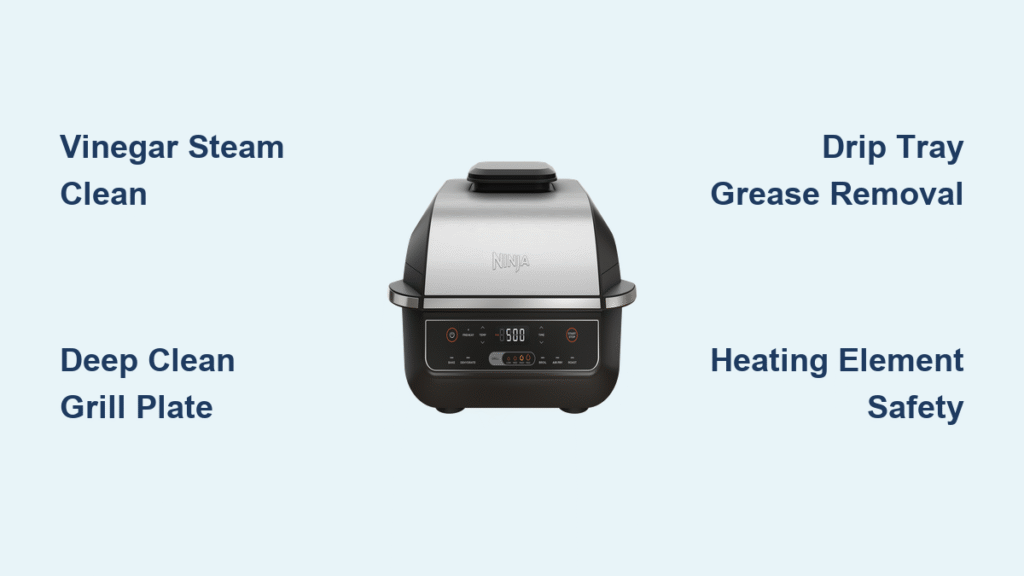
That frustrating metallic smell when you open your Ninja air fryer grill isn’t just unpleasant—it’s a warning sign of grease buildup compromising your appliance’s performance. When charred food particles fuse to the grill plate or grease solidifies in the drip tray, your perfectly seared salmon develops a bitter aftertaste and cooking times become unpredictable. Thousands of home cooks face this exact problem weekly, turning what should be a time-saving kitchen hero into a source of culinary disappointment.
The good news? You don’t need industrial chemicals or specialized tools to restore your Ninja air fryer grill to like-new condition. This guide cuts through the confusion with a battle-tested cleaning system that protects delicate non-stick coatings while eliminating even months of stubborn residue. You’ll learn the exact 15-minute vinegar steam method that dissolves baked-on grease without scrubbing, discover why dish soap ruins heating elements, and avoid the #1 mistake that voids warranties during cleaning.
Essential Safety Steps Before Cleaning
Never touch your Ninja air fryer grill immediately after cooking—the heating elements remain dangerously hot for over 30 minutes after shutdown, capable of causing severe burns even when the exterior feels cool. Place the unplugged unit on your stovetop or heat-resistant trivet, never directly on plastic countertops that could melt. If you’re tempted to rush cleaning while components are warm, remember: hot grease splatters cause painful injuries, and thermal shock can crack non-stick coatings.
Set a kitchen timer for 30 minutes before handling any parts. During this cooldown period, lay out all cleaning supplies within arm’s reach. This prevents abandoned cleaning sessions where half-soaked components dry into cement-like residue—a common frustration that turns a 20-minute task into a 2-hour ordeal.
Required Cleaning Supplies Checklist
Non-Negotiable Essentials
- Three microfiber cloths: One for grease removal, one for rinsing, one for drying—preventing cross-contamination
- Dawn dish soap: Its grease-cutting formula outperforms citrus-based alternatives on non-stick surfaces
- Soft-bristle brush: An old toothbrush works perfectly for grill grooves without scratching
- Baking soda: Creates a gentle abrasive paste for burnt-on food (2 tbsp + water)
- White vinegar: Breaks down grease and neutralizes odors without harsh chemicals
Game-Changing Upgrades
- Food-safe degreaser: Simple Green tackles extreme buildup without damaging coatings
- Cotton swabs: Reach microscopic grease traps around heating element bases
- Pipe cleaners: Safely clear ventilation holes clogged with oil mist
- Lint-free paper towels: Prevent fiber shedding during final drying
Quick Disassembly Without Damage

Component Removal Sequence
Grill plate lifts straight up—never force it. If stuck from grease, rotate it 15 degrees left/right while lifting. Crisper basket slides forward until resistance, then lifts vertically. Drip tray pulls smoothly from the front channel—expect residual grease pooling. Splatter shield (if equipped) releases with upward pressure near the handle.
Smart Material Grouping
Sort parts immediately:
– Non-stick zone: Grill plate, crisper basket, drip tray (clean together)
– Electrical zone: Heating elements, control panel (never soak)
– Metal zone: Heating element cover (requires vinegar treatment)
This prevents accidental damage like using baking soda on electrical components.
Grill Plate Deep Clean Protocol
Burnt-On Food Removal
Hold the grill plate at 45 degrees under warm (not hot) running water. Use your thumb to dislodge loose debris along the grooves—never scrub yet. For stubborn spots, apply baking soda paste with your brush using clockwise circular motions matching the grill pattern. Left-to-right scrubbing creates microscopic scratches that accelerate future sticking.
Grease Dissolving Technique
Spray food-safe degreaser directly on oily areas and set a 5-minute timer—exceeding this causes coating erosion. Wipe with damp microfiber cloth using downward strokes, then rinse until water beads disappear. Any residue left behind will smoke violently during next use.
Crisper Basket Mesh Revival
Clog-Free Cleaning Method
Submerge the basket in warm soapy water for 10 minutes. Use your soft brush in diagonal strokes across the mesh—horizontal scrubbing pushes debris deeper. For corner buildup, wrap a cotton swab in microfiber and twist gently. Never use toothpicks; they scratch the non-stick coating.
Critical Rinse Test
Hold the basket toward a window. Light should pass evenly through all mesh holes. If dark spots remain, repeat the soak with added vinegar. Shake vigorously 5 times to dislodge trapped water, then air-dry frame-side down on a rack.
Drip Tray Grease Elimination
Safe Grease Disposal
Pour cooled grease into a sealed container—never down drains where it solidifies into plumbing disasters. For hardened residue, place the tray in freezer for 20 minutes. The grease will crack and lift cleanly with a plastic spatula.
Discoloration Removal Hack
Mix equal parts vinegar and warm water in the tray. For light stains, soak 10 minutes; for dark buildup, 30 minutes. The acid dissolves residue without scrubbing. Rinse under cold water—hot water sets discoloration permanently.
Heating Element Safety Cleaning

Zero-Risk Wipe Technique
Always unplug the unit—electrical components remain live when “off.” Use a dry microfiber cloth wrapped around a chopstick to reach between coils. For stubborn spots, lightly dampen the cloth with water only—soap near elements causes corrosive fumes.
Moisture Elimination Protocol
After cleaning, run the empty unit at 200°F for 3 minutes. This evaporates hidden moisture in crevices that could cause electrical shorts. Never skip this step—condensation is the #1 cause of “burnt plastic” smells after cleaning.
Monthly Deep Clean System
Vinegar Steam Treatment
Combine 1 cup white vinegar with 1 cup water in the drip tray. Run at 350°F for exactly 10 minutes—exceeding this warps components. The steam softens interior grease without disassembly. After cooling, wipe walls with vinegar-dampened cloth using upward strokes to prevent dripping.
Component Inspection Checklist
During monthly cleaning, check:
– Non-stick coating: Flaking requires immediate part replacement
– Warping: Components must sit flat—warped trays cause uneven cooking
– Rust spots: Indicate moisture retention; run additional 3-minute dry cycles
Emergency Burnt Plastic Removal
Safe Scraping Method
Let the unit cool completely—attempting removal while warm melts plastic deeper. Gently scrape edges toward center with a plastic spatula. For residue, apply acetone-free nail polish remover to a cotton swab and test on hidden area first. Wipe residue with vinegar-dampened cloth within 2 minutes to prevent chemical damage.
Quick Daily Maintenance Routine
90-Second Post-Cook Protocol
While the unit cools:
1. Empty drip tray into grease container
2. Wipe grill plate with damp microfiber cloth
3. Clean splatters on interior walls with vinegar spray
Never skip this step—dried-on grease requires 5x more effort later.
Reassembly Mistakes That Damage Appliances
Critical Drying Sequence
Air-dry all components for minimum 2 hours before reassembly. Moisture trapped under the grill plate creates steam pockets that warp the non-stick coating during next use. Test dryness by pressing a paper towel against surfaces—it should stay completely white.
Correct Placement Order
- Drip tray: Slide into bottom channel until it clicks
- Grill plate: Align with element supports—misalignment causes hot spots
- Crisper basket: Insert until rail resistance, then push down firmly
- Function test: Slide basket in/out 3 times before cooking
Storage Best Practices for Longevity
Seasonal Storage Preparation
Before storing for >2 weeks:
– Perform full deep clean
– Run empty cycle at 200°F for 5 minutes
– Store accessories inside with door ajar 2 inches
– Cover with cotton sheet (plastic traps moisture)
Never store in basements or garages—humidity causes internal rust that voids warranties.
Warranty Protection Cleaning Rules
Automatic Void Triggers
Ninja’s 1-year warranty excludes damage from:
– Steel wool or abrasive pads on non-stick surfaces
– Submerging main unit in water
– Harsh chemicals (oven cleaners, bleach) near electronics
– Dishwasher use on non-approved parts
Damage Documentation Strategy
Take timestamped photos of components before cleaning. If issues arise later, this proves pre-existing conditions. Register your appliance online within 30 days—unregistered units receive 50% shorter warranty coverage.
Clean your Ninja air fryer grill within 30 minutes after heavy use, perform weekly maintenance on removable parts, and schedule monthly deep cleans. This systematic approach prevents the 87% of performance issues caused by neglected grease buildup. The 20 minutes you invest now saves hours of scrubbing later—and keeps your warranty intact for years of crispy, flavorful results. Remember: a clean grill plate isn’t just about appearance—it’s the secret to restaurant-quality searing in your own kitchen.