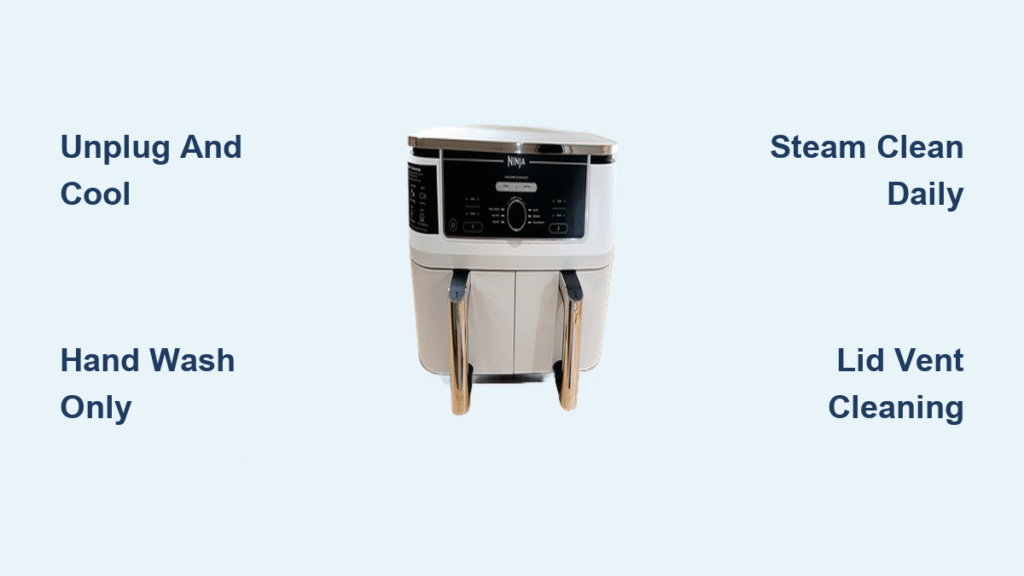
Your Ninja Foodi air fryer transforms weeknight dinners with crispy perfection, but grease buildup and food residue quickly sabotage its performance. That stubborn cheese crust from last night’s wings or lingering fish odor? They’re not just unpleasant—they force your appliance to work harder, extending preheat times and creating uneven cooking results. Knowing how to clean Ninja Foodi air fryer components properly ensures consistent crisping power and prevents costly replacements. This guide delivers actionable methods for daily wipe-downs to deep lid cleaning, all verified through Ninja’s official care protocols. You’ll reclaim peak performance in under 30 minutes without damaging your investment.
Unplug and Cool Down Before Touching
Never skip the cooling period—heating elements retain dangerous heat for 30+ minutes after cooking. Start by turning off the unit, unplugging it from the wall, and waiting a full half-hour. Rushing this step risks severe burns when handling the hot interior chamber or metal components. While waiting, gather supplies: microfiber cloths, mild dish soap, baking soda, lemon juice, soft sponge, toothpicks, and a T15 screwdriver for lid maintenance.
Remove all detachable parts immediately once cooled. Lift out the crisper basket, cooking pot, reversible rack, and any specialty accessories like the dehydrator tray. Place them on a heat-safe surface—not directly in the sink—to prevent accidental drops. This isolation protects electrical components from water exposure during cleaning and gives you full access to hidden grease traps beneath the basket rails.
Hand Wash Only: Why Dishwashers Damage Your Foodi
Dishwashers warp Ninja Foodi parts permanently. The high-pressure jets and extreme heat of dishwasher cycles distort plastic components like the crisper basket handle and crack non-stick coatings on the cooking pot. Unlike standard cookware, these precision-engineered parts can’t withstand thermal shock. Even “gentle” cycles expose them to temperatures exceeding 140°F that Ninja explicitly prohibits.
Avoid toxic chemical residues by ditching oven cleaners, bleach, or degreasers. These leave invisible films that transfer to your next meal—especially dangerous with acidic foods like tomatoes or citrus. Stick exclusively to food-safe solutions:
– Warm water with 1–2 drops of mild dish soap
– Baking soda paste (2 tbsp baking soda + 1 tsp water) for baked-on grease
– Lemon juice diluted 1:1 with water for odor neutralization
These prevent coating degradation while tackling 95% of residue.
Daily 5-Minute Steam Clean for Odor Removal
Run a post-cooking steam cycle after messy meals like fish tacos or buffalo wings. Pour 1 cup hot water and 1 cup lemon juice into the empty cooking pot, then select “Pressure Cook” for 10 minutes. The trapped steam softens grease on the heating element shield and interior walls while lemon’s acidity breaks down odor molecules from pungent foods.
Wipe while surfaces are warm (not hot!) for effortless residue removal. After the cycle completes and the unit cools enough to touch safely, use paper towels to lift loosened grime. Focus on the heating element guard and vent areas where smoke accumulates. This daily habit prevents the 2-hour deep cleans caused by neglected buildup—critical for maintaining that signature Foodi crisp.
Deep Clean Removable Parts in 20 Minutes

Soak Baked-On Residue Before Scrubbing
Fill your sink with warm water and 2 drops of dish soap. Submerge the crisper basket, cooking pot, and rack for 15–20 minutes. This dissolves hardened cheese, oil splatters, and starches—no aggressive scrubbing needed. For glazed wings residue, add 1 tbsp baking soda to the soak water to break down sticky sugars.
Remove Stubborn Stains Without Scratching
Apply baking soda paste to problem areas like the basket’s wire mesh or pot corners. Using a soft sponge (never steel wool!), rub in small circles with light pressure. The paste lifts charred bits while protecting non-stick coatings. Rinse thoroughly under running water—any leftover granules create smoke during cooking.
Dry Components Completely to Prevent Steam Issues
Air-dry all parts upside down on a clean towel for 30 minutes minimum. Trapped moisture in crevices causes sputtering during preheat and reduces crisping efficiency. Speed drying with a microfiber cloth only after visible water beads disappear—never reassemble damp components.
Interior Chamber Deep Clean Without Damage

Remove loose debris first with wooden toothpicks. Gently lift stuck particles from corners near the heating element guard, working top-to-bottom to catch falling crumbs. Metal tools scratch coatings permanently, so discard any sharp implements. For grease-splattered walls, dampen a microfiber cloth with warm soapy water and wipe in circular motions.
Rinse soap residue meticulously using a second clean, damp cloth. Test surfaces by running your finger—if it feels slick, residual soap will smoke during the next cook. Pay special attention to the bottom chamber where oil pools; even thin films ignite at high temperatures.
Air Fryer Lid Deep Clean: T15 Screw Guide
Safely Remove the Lid in 60 Seconds
Unscrew four T15 screws along the lid’s base—keep them in a small bowl to avoid loss. Lift straight up without twisting; forcing it can disconnect internal wiring. Note the electrical plug’s position before setting the lid aside. This step is non-negotiable for cleaning vent clogs causing fishy odors.
Clean Heating Elements Without Water Damage
Wipe the heating coil with a cloth barely dampened by water (wring until no drips remain). Excess moisture seeps into electrical contacts, causing shorts. Focus on visible grease spots—not the coil itself—to preserve heating efficiency. For stubborn grime, use a dry toothbrush on cooled elements only.
Clear Vents to Restore Airflow
Scrub vent openings with a dry cotton swab to remove grease blockages. Built-up residue here reduces circulation by 40%, leading to soggy fries. Hold the lid upside down while cleaning to prevent debris from falling into wiring channels. Reassemble only when 100% dry—test by shaking near your ear for water sounds.
Exterior and Control Panel Wipe-Down
Wipe stainless steel weekly with a vinegar-water mix (1:1 ratio) to remove fingerprint oils. Spray onto a microfiber cloth—not the appliance—to avoid liquid seeping into control buttons. Pay extra attention to the handle crevice where grease accumulates from hand contact.
Never submerge the power cord. Instead, unplug it and wipe with a dry cloth to check for fraying. Damaged cords pose fire risks with high-heat appliances—replace immediately if compromised.
Reassemble Correctly to Avoid Cooking Failures
Verify dryness before reassembly—even hidden moisture in the pot’s base causes steam leaks. Place the cooking pot first, ensuring it clicks into the bottom rail. Then add the reversible rack (perforated side up for air frying), and finally the crisper basket. All components must sit flush; misalignment creates cold spots.
Test functionality empty for 2 minutes on “Air Fry” mode. Listen for grinding noises indicating basket misalignment or vent blockages. This 120-second check prevents ruined meals from improper reassembly.
Maintenance Schedule Based on Usage
| Frequency | Task | Time Required |
|---|---|---|
| After every use | Steam clean + interior wipe | 5 minutes |
| Weekly | Hand wash all removable parts | 10 minutes |
| Monthly | Full deep clean including lid | 30 minutes |
| Heavy use (daily greasy foods) | Add mid-week lid vent cleaning | 15 minutes |
Heed these performance red flags: Longer preheat times, uneven browning, or persistent smoke mean deep clean immediately—don’t wait for your schedule.
Prevent Buildup Before It Starts
Line the cooking pot with perforated parchment paper when air frying messy foods like meatballs. Leave 1 inch exposed around the edges for proper air circulation—full coverage traps steam and creates soggy results. This barrier catches drips while allowing crisping.
Lightly oil the basket before cooking with an oil mister (not aerosol sprays). Propellants in spray cans degrade non-stick coatings over time. Just 3 spritzes create a release layer that prevents sticking and cuts cleanup time by 70%.
Master how to clean Ninja Foodi air fryer components correctly, and you’ll extend its lifespan by years while guaranteeing restaurant-quality results. That monthly 30-minute deep clean prevents the dreaded 3-hour scrub session when neglect catches up. Your future self will thank you when the heating elements stay smoke-free and every batch of fries emerges perfectly golden. Implement these steps consistently, and your Foodi won’t just cook meals—it’ll deliver crispy perfection, cycle after cycle. Start tonight with the 5-minute steam clean; your next meal depends on it.