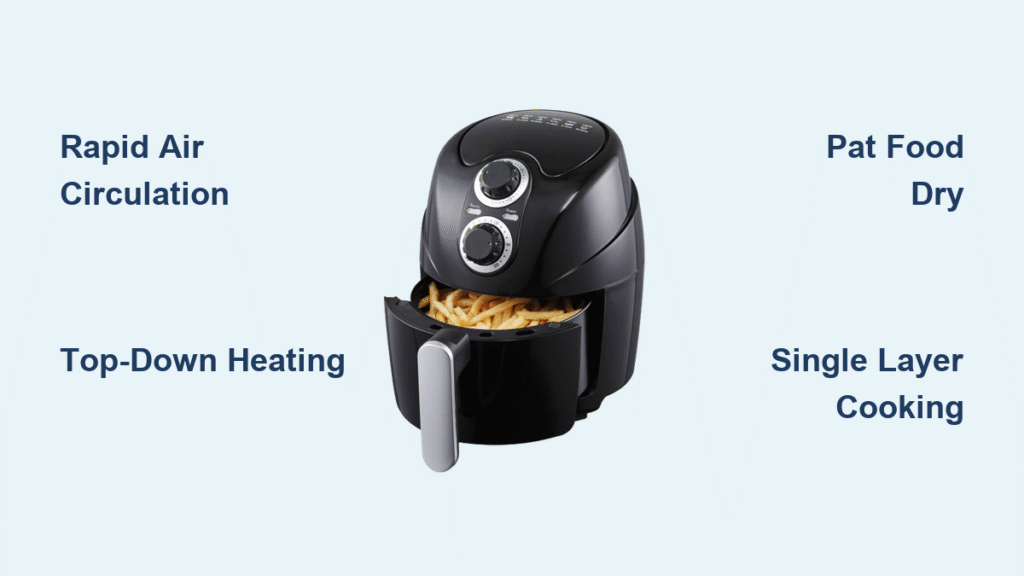
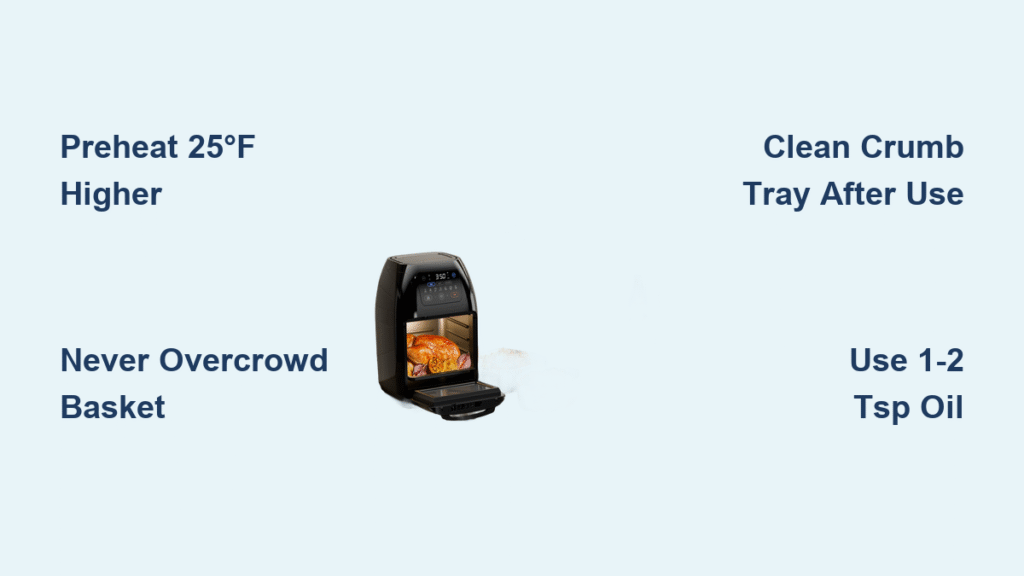
That first whiff of smoke when you fire up your Chefman air fryer oven? Don’t panic—it’s just manufacturing residue burning off. While these countertop wonders promise crispy fries and golden rotisserie chicken in half the time, decoding the control panel and rack positions can turn your culinary dreams into smoke alarms. This guide cuts through the confusion with exact settings for perfect results, whether you own the digital RJ50 series or dial-controlled TurboFry model. You’ll discover why preheating 25°F higher than your recipe calls for makes all the difference, how to position Brussels sprouts to avoid burnt edges, and the critical burn-off step most manuals bury on page 12.
Skip the trial-and-error phase. Within minutes, you’ll know exactly where to place the wire rack for bakery-style cookies, how long to soak accessories for effortless cleaning, and why overcrowding your basket creates soggy disasters. Let’s transform that intimidating box of parts into your most-used kitchen tool—starting right now.
Unbox and Setup Your Chefman Correctly
Ignoring hidden plastic films during unboxing causes melted plastic disasters and ruined first meals. Start by removing every scrap of packaging—yes, even the nearly invisible film coating the heating elements and door gasket. Missing these leads to toxic fumes and uneven cooking from day one.
Verify your accessories against this critical checklist:
– Air fry basket (mesh or perforated metal)
– Wire rack or baking tray
– Crumb tray (non-negotiable for catching grease)
– Rotisserie spit and forks (if your model supports it)
– Fetch tool (for safe hot spit removal)
– Manual and quick-start guide
Place your oven on a heat-resistant counter with 5 inches clearance on all sides and 8 inches above—this isn’t optional. Inadequate space traps heat, triggering overheating errors (E1 codes). Wash all accessories in warm soapy water, rinse thoroughly, and dry completely. Then run the essential 20-minute burn-off cycle at 400°F with windows open. This eliminates chemical residues that otherwise taint your first batch of fries.
Master Control Panel Navigation Instantly

Digital Touchscreen Commands (RJ50 Series)
Power up with a 3-second long press on the power button—anything shorter won’t activate the system. Adjust temperatures in precise 5°F increments (200-450°F) using the +/- buttons, not the preset icons. Why? The “French fries” button defaults to 400°F for 15 minutes, but frozen fries actually need 18 minutes at 400°F for optimal crispness. The light button is your secret weapon for checking progress without heat loss, while the rotate button must be pressed after closing the door to engage the rotisserie motor. Skip this step, and your chicken spins unevenly.
Dial Control Operation (TurboFry Series)
TurboFry users avoid digital confusion with tactile dials. Twist the top dial to set temperatures from Warm (175°F) to 450°F—no increments, just smooth rotation. The bottom dial controls time with a satisfying mechanical bell at zero. Toggle between Air Fry, Bake, Broil, and Toast using the manual function selector. Pro tip: When baking cookies, nudge the temperature dial slightly above 325°F since analog dials often run 10-15°F low.
Preheat Like a Professional Every Time
Preheating separates soggy failures from golden perfection. Always set your temperature 25°F higher than the recipe requires during preheat—this compensates for the 50°F heat drop when adding cold food. For example, preheat to 425°F when cooking chicken wings at 400°F.
Critical preheat steps:
1. Ensure the chamber is empty except for your rack or basket
2. Close the door until you hear the definitive click (units won’t operate with gaps)
3. Wait 3-5 minutes for temps under 400°F; 7 minutes for 400°F+
4. Add food immediately when the double-beep sounds
Skip preheating only for dehydrating (starts low) or reheating leftovers (2 minutes max). Otherwise, you’re sacrificing crispiness.
Air Fry, Bake, and Rotisserie Like a Pro
Air Frying Fundamentals That Guarantee Crispiness
Position your basket on the middle rack for even browning on most foods—use the lower rack only for extra-crispy tops like bacon. Arrange food in a single layer with ½ inch between pieces; overcrowding creates steam pockets that leave fries limp. Lightly brush proteins with 1-2 teaspoons of oil (never aerosol sprays—they degrade non-stick coatings). Shake fries every 5-8 minutes but never shake battered items like onion rings—they’ll lose their coating.
Baking Mode Secrets for Perfect Cookies
Reduce conventional oven temperatures by 25°F when converting recipes (e.g., 325°F instead of 350°F). Place cookie dough on the lower rack for even bottom browning, and always use parchment paper to prevent burning. For bakery-style bread crusts, add ¼ cup water to the drip tray—the steam mimics professional ovens.
Rotisserie Success (No More Dry Chicken)
Spit assembly mistakes cause 90% of failures:
1. Slide the first fork onto the spit with tines facing inward
2. Center your chicken, securing with both forks
3. Test rotation—if it wobbles, adjust food balance
4. Tighten thumb screws with the fetch tool
Insert the spit into the right-side socket first, align the left end until it clicks, then press “rotisserie” followed by “rotate.” Never exceed 4 pounds—overloading strains the motor (E3 errors). Baste through the top vents with a silicone brush to avoid opening the door.
Fix These 4 Problems Immediately

Food not crispy? You’re either overcrowding the basket (reduce batch size 30%), using too low a temperature (increase 25°F), or skipping the oil brush (1-2 tsp is essential).
Uneven cooking? Rotate your pan 180° halfway through and verify 5-inch clearance around the unit—blocked vents cause hot spots.
Excessive smoke? Clean accumulated grease from the drip tray after every use. High-fat foods like bacon need 375°F (not 400°F) to prevent flare-ups.
Unit won’t turn on? Confirm the door clicks shut (listen closely), test the outlet with another appliance, and reset by unplugging for 30 seconds.
Clean Your Chefman Without Damaging It
Daily cleaning prevents 80% of errors:
1. Unplug and wait 30-60 minutes—surfaces exceed 200°F
2. Empty the crumb tray (non-negotiable)
3. Soak accessories 15 minutes in warm soapy water
4. Scrub with non-abrasive sponges only—steel wool destroys coatings
5. Wipe interiors with baking soda paste for stubborn residue
Deep clean weekly by brushing crumbs from the door seal. Monthly, vacuum heating element covers with a brush attachment. Deodorize burnt smells with a 400°F lemon water cycle—never use harsh chemicals.
Safety Rules That Prevent Burns and Errors
Always use oven mitts—the handle hits 200°F during cooking. Open doors slowly away from your face to avoid steam burns. Maintain 12 inches from walls and 18 inches below cabinets; violating this trips overheating protection (E1 errors). Activate child locks on digital models by holding temperature and time buttons for 3 seconds. Verify chicken reaches 165°F internally—guessing causes food poisoning.
Convert Any Recipe Flawlessly
Reduce conventional oven temperatures by 25°F and check for doneness at 75% of the original time. For example, cookies baked at 350°F for 12 minutes in a traditional oven become 325°F for 9 minutes in your Chefman. Use pans with 1-inch clearance on all sides for air circulation. When batch cooking, allow 5 minutes between batches for temperature recovery—skipping this causes uneven results.
Advanced Features Worth Mastering
Use dehydrate mode at 135°F for 6 hours to make beef jerky—slice meat ¼ inch thick and blanch veggies first. Activate proofing mode at 85°F with the light on for perfect sourdough rises (add a cup of warm water to prevent drying). Reheat pizza at 325°F for 4 minutes with 1 tsp water sprinkled on top—this revives crispness without drying.
Your Chefman air fryer oven delivers restaurant results when you master three non-negotiables: never overcrowd the basket, always preheat 25°F higher, and clean the crumb tray after every use. Start with the temperature chart for frozen fries (400°F for 18 minutes, shaken once), then experiment with rotisserie chicken using the spit assembly steps. Within a week, you’ll be dehydrating fruit leather and proofing artisan bread—no full oven required. The key? Treat those clearance zones like sacred space, and your Chefman will reward you with crispy, golden perfection every time. Now go make those wings.